

The SIMPLEST Gap-Down Reversal Trading Strategy of All Time
Using Only 1 Entry Rule and 1 Exit Rule.

Hey,
I’m sure you want a clean reversal setup.
The one nice setup is where SPY gaps down, shakes everyone out, and then rips higher while the trade looks obvious in hindsight.
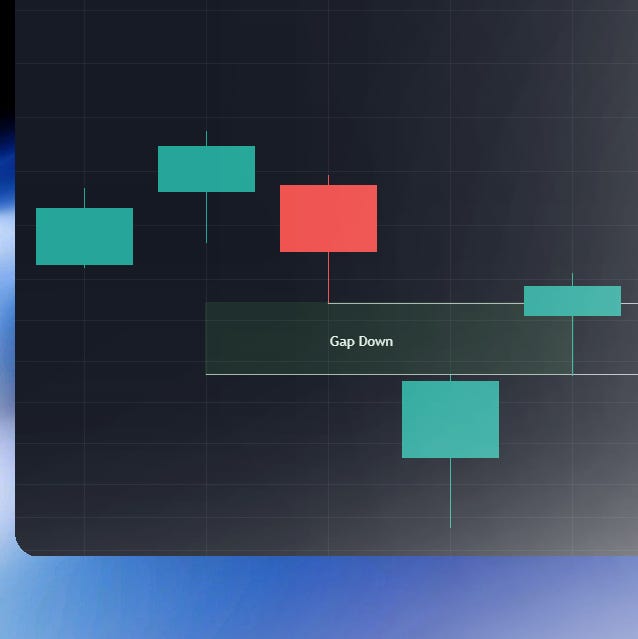
This idea is actually very simple.
But how does it work?
What are the rules?
And should you even use it?
In this article, we’ll find out.

Gap Down Only Proves Weakness, Not Exhaustion
A gap below yesterday’s low tells you only one thing before the trade:
SPY is opening in a weak location.
It does not tell you if the sellers are exhausted or the move down is just getting started.
Every finished chart becomes too easy to explain.
Winners get called reversal setups.
Losers get called obvious warning signs.
That is not research.
So this test needs to answer the question before the outcome is known:
When SPY opens below the prior day’s low, is buying that weak open a repeatable trade, or is it just a pattern that looks better after you already know the close?
Below is another candle-related stock market pattern I researched before:

Yesterday I made a YouTube video where Codex, Gemini, and Claude Code all got the same RealTest task: write the strategy, run the backtest, optimize it, walk-forward it, and produce the charts. I wanted to see which agent could be the best.
The results were pretty interesting.

The Test: Buy the Weak Open, Hold Until Green
The hypothesis is that a gap below the prior day’s low can create short-term reversal pressure.
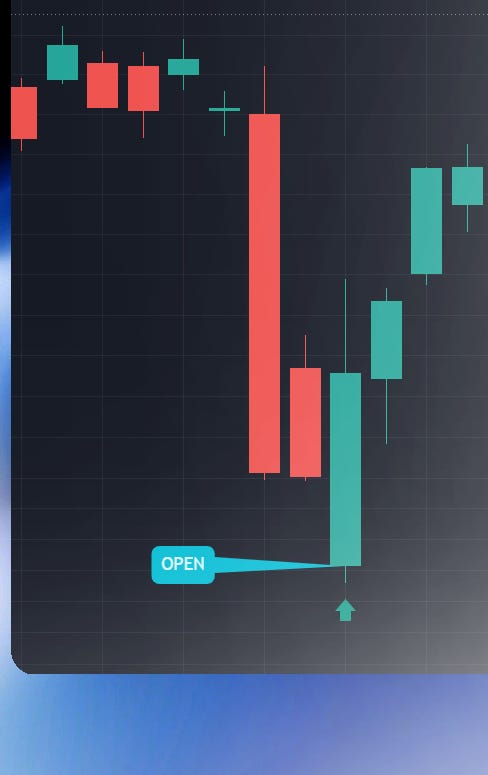
SPY opens below the entire previous day’s range. Overnight or pre-market selling has pushed it into a weak location. If that selling is forced, emotional, or simply overdone, the regular session may reverse part of the move.
The strategy is only trying to capture that reaction. Macro conditions and multi-month SPY exposure are outside the scope of this test.
The test asks one narrow question:
If SPY opens below yesterday’s low, is there enough short-term mean reversion to buy the open and hold until SPY prints a green day?
Narrow tests are useful because they leave less room for vague explanations. Either the behavior shows up in the data or it does not.

One Entry Rule. Zero Filters.
The strategy buys SPY after a weak open.
Buy SPY when the next regular-session open is below the previous regular-session low.
More about the rules (step-by-step) below.
There are no moving averages, RSI filters, volatility filters, or optimized gap-size thresholds. A one-condition entry gives the result fewer places to hide. If the test works, you know what drove it. If it fails, you do not have twelve filters to untangle.
But before we look at the results, one practical note.
If you have used AI for RealTest work, you probably know the annoying part:
You use AI thinking it will make everything faster, but in the end you realize you wasted even more hours fixing errors and don’t understand any of the code AI wrote.
That is the workflow problem I built the new SetupAlpha course around.
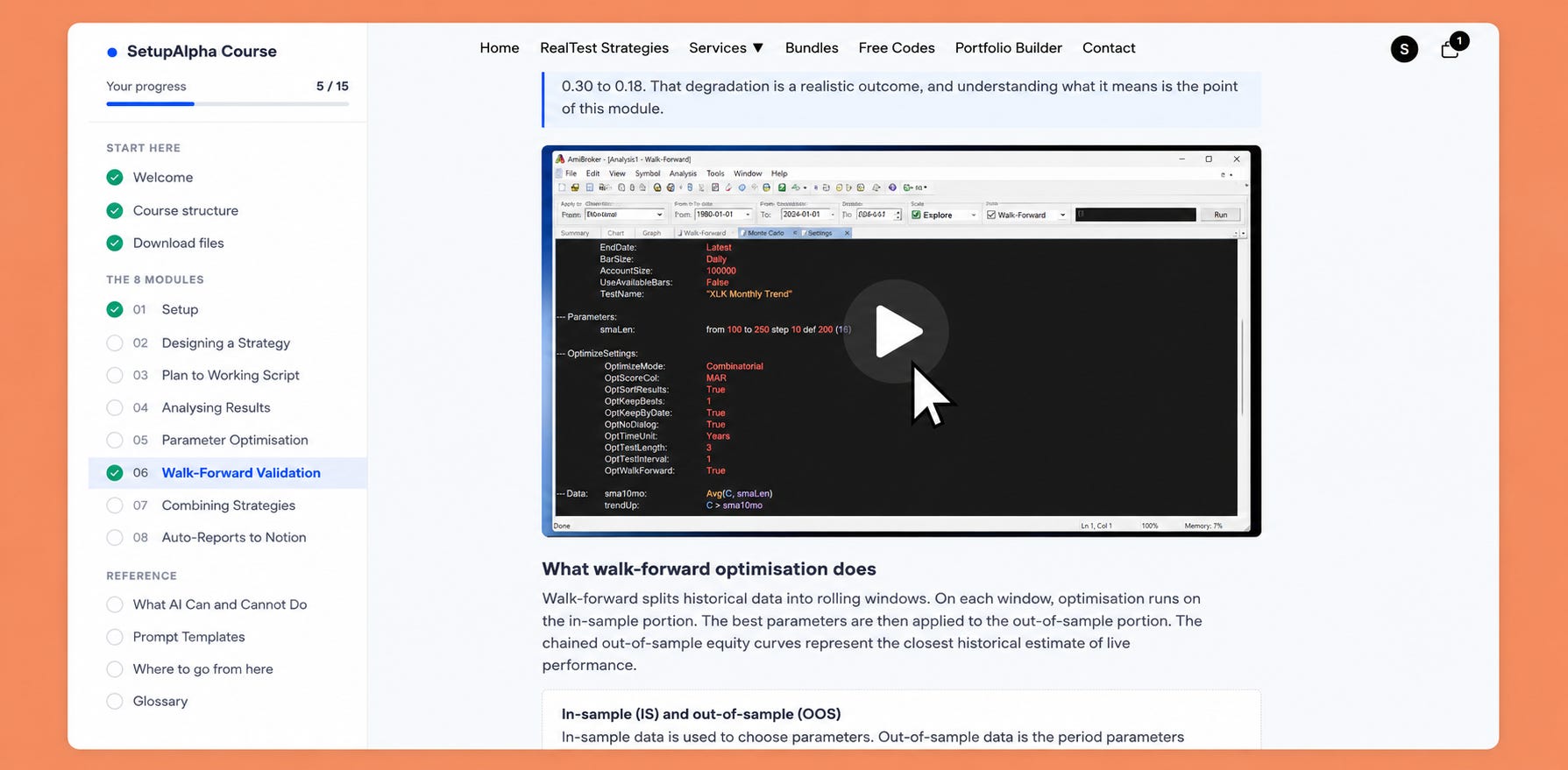
The course connects Claude Code to a RealTest. My goal is not to make AI predict the market. My goal is to shorten the loop from trading idea to tested RealTest script.
Check out the course here.

It Didn’t Beat Buy-and-Hold, But Exposure Changed the Story
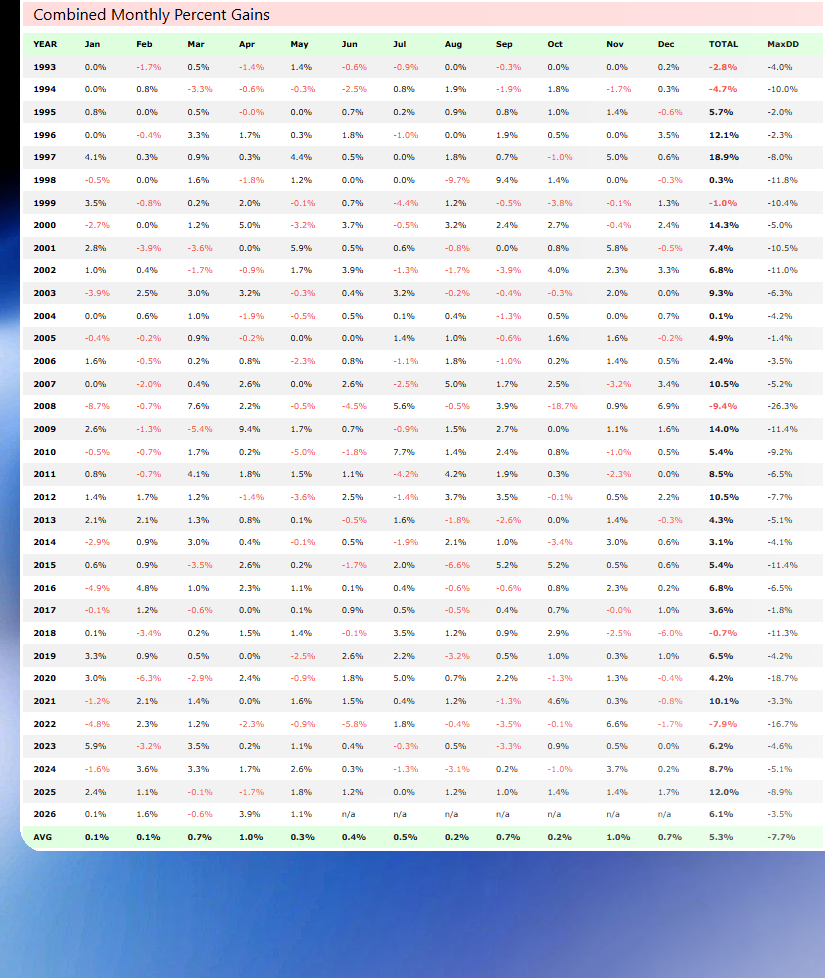
Here are the RealTest summary stats (includes slippage):
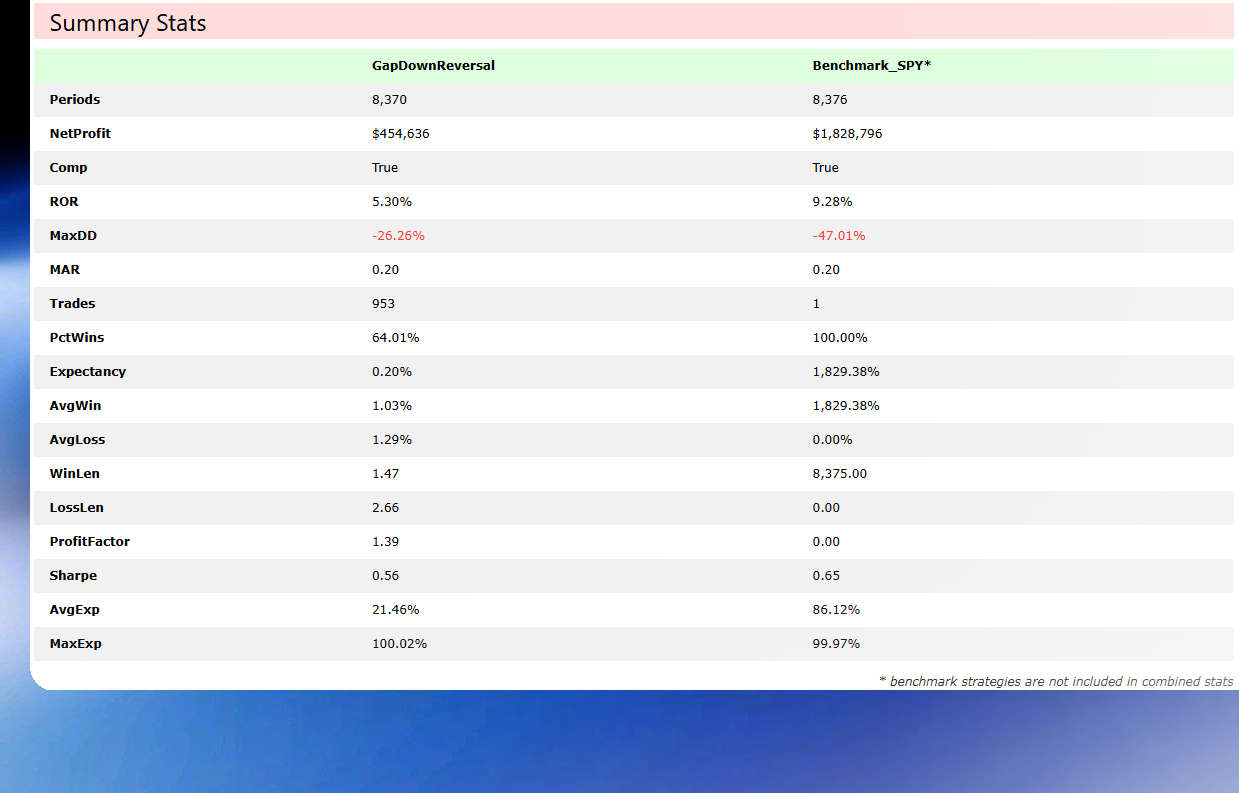
This strategy made far less money than buying and holding SPY.
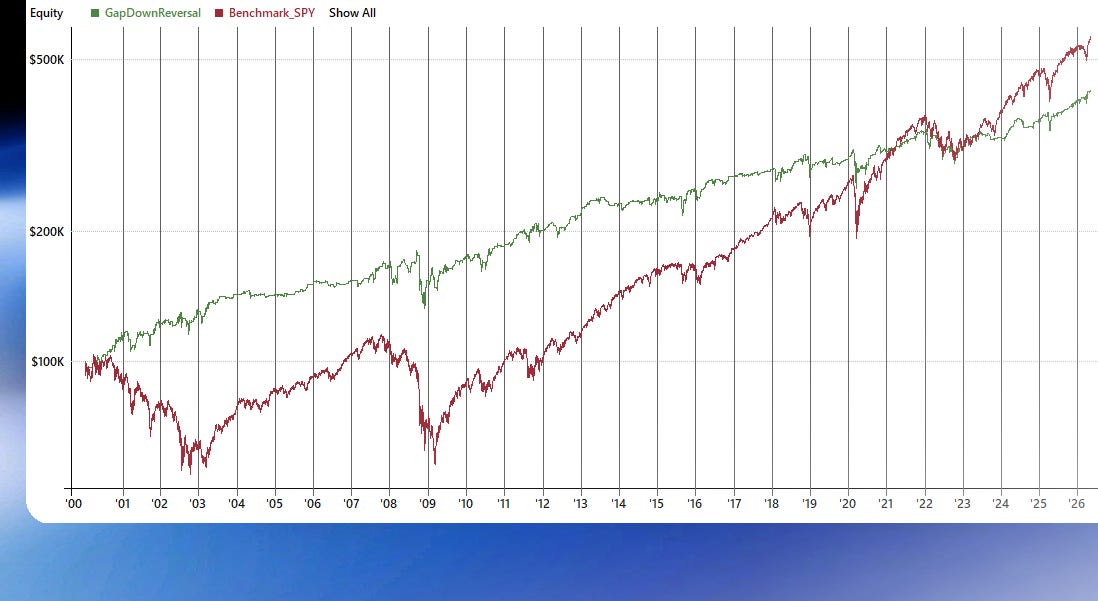
SPY also had the higher Sharpe ratio. If the goal is to maximize long-only SPY exposure, this test is not a replacement.
The more useful comparison is exposure. The strategy earned a similar MAR while being invested only 21.46% of the time. That changes the interpretation and I would treat it as a short-term system, not as a “better SPY” strategy.
That kind of system can be useful as a portfolio component, because it does not require you to be invested every day.
Next let’s talk about:
Trading Strategy Rules (Step-By-Step)
How You Can Use It
RealTest Strategy Script
What Do We Learn