


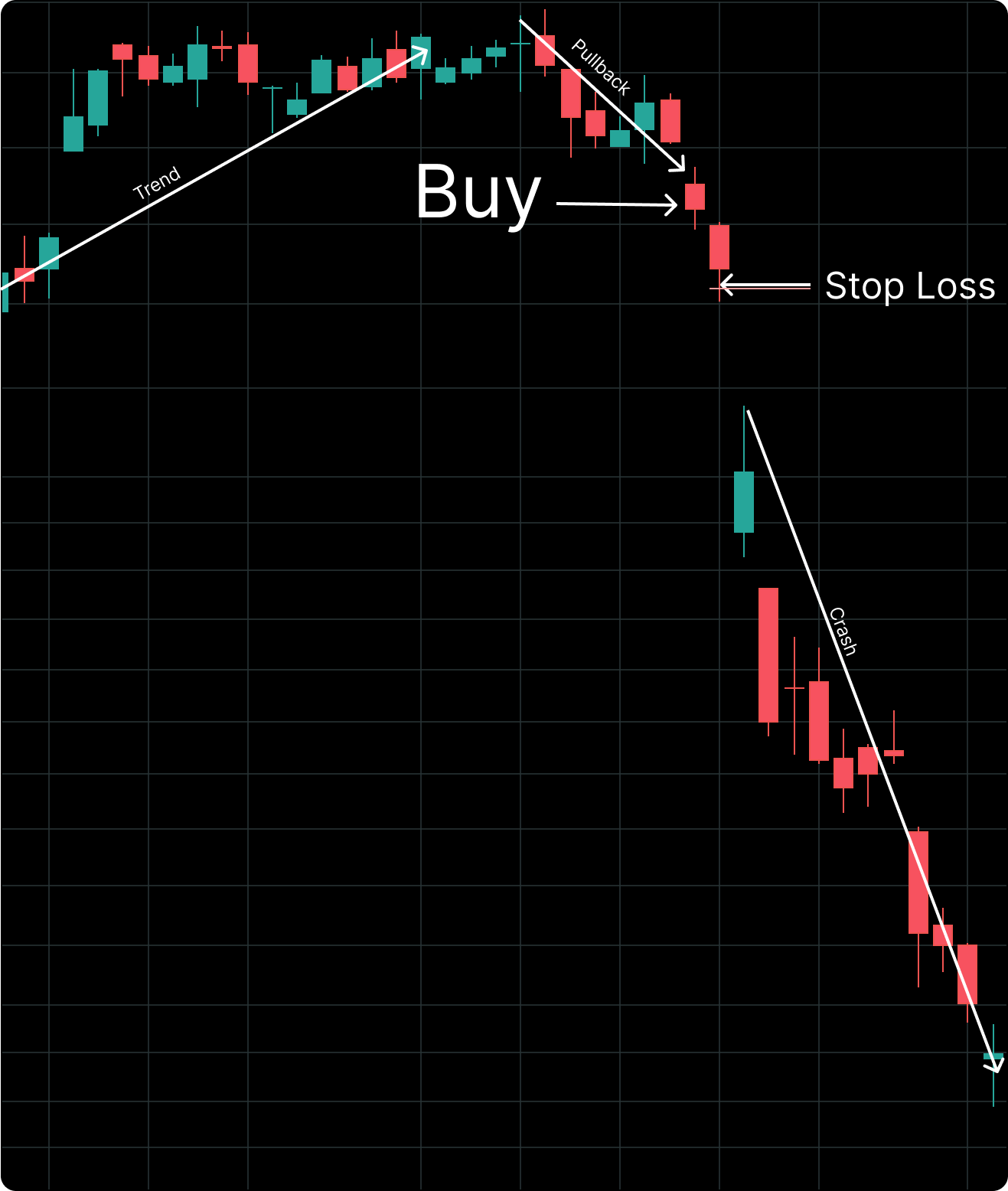
“I’d feel more comfortable if I had a stop-loss in place.”
Yes, that is the case for a stop and it is a fair one.
If you are out at 5%, no single position can keep taking money off you week after week.
I tested it on a
Long mean reversion system
Trading SPY 0.00%↑ 500 members
From 3 January 2000 to 7 August 2026.
Backtest in-sample (2000-2012)
Backtest out-of-sample (2013-2026)
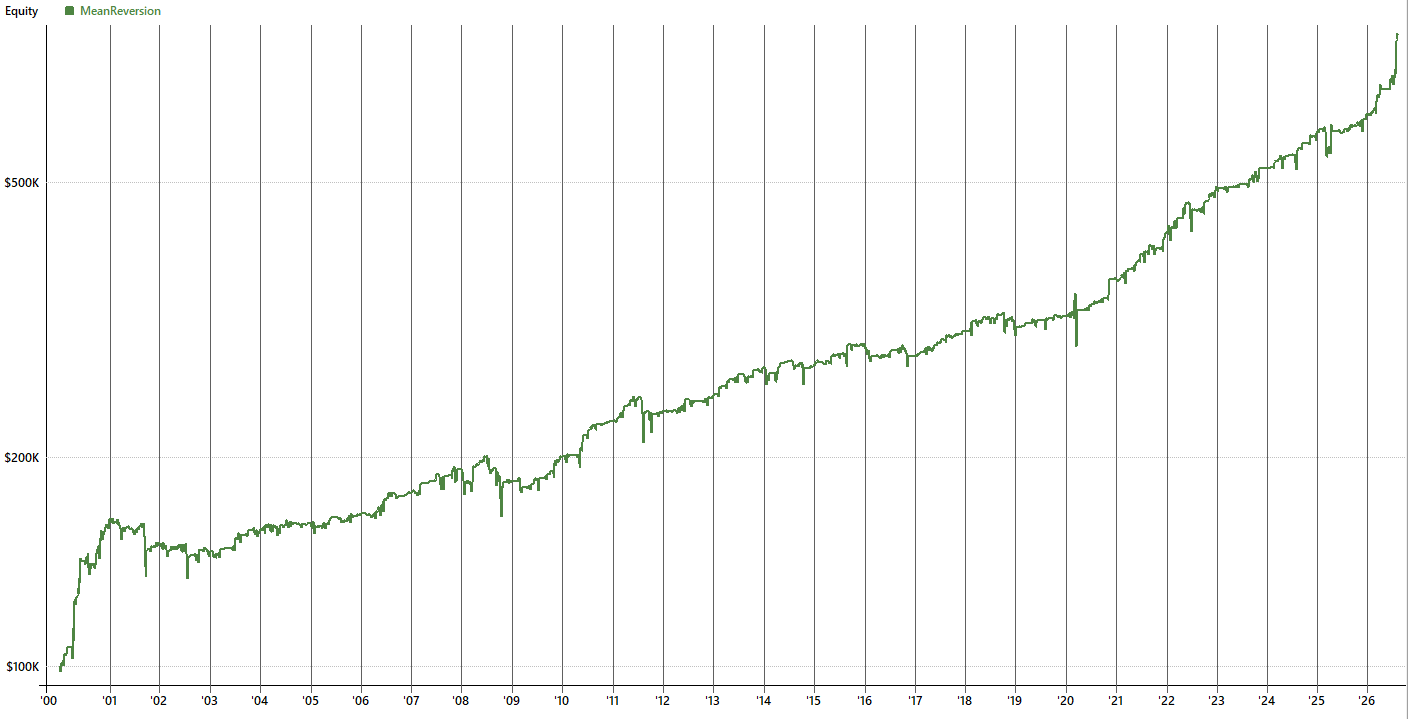
With no stop the system returned 8.22% a year and its worst drawdown, the deepest fall from a peak, was -18.63%. Adding a 5% stop to the identical entries dropped the return to 1.05% a year and took the worst drawdown to -41.78%.
The stop was the only thing that moved.
Below are twelve stop levels, the two decades on their own, and what became of the 911 trades the stop cut short.

$100,000 becomes $813,874 without a stop and $131,658 with one
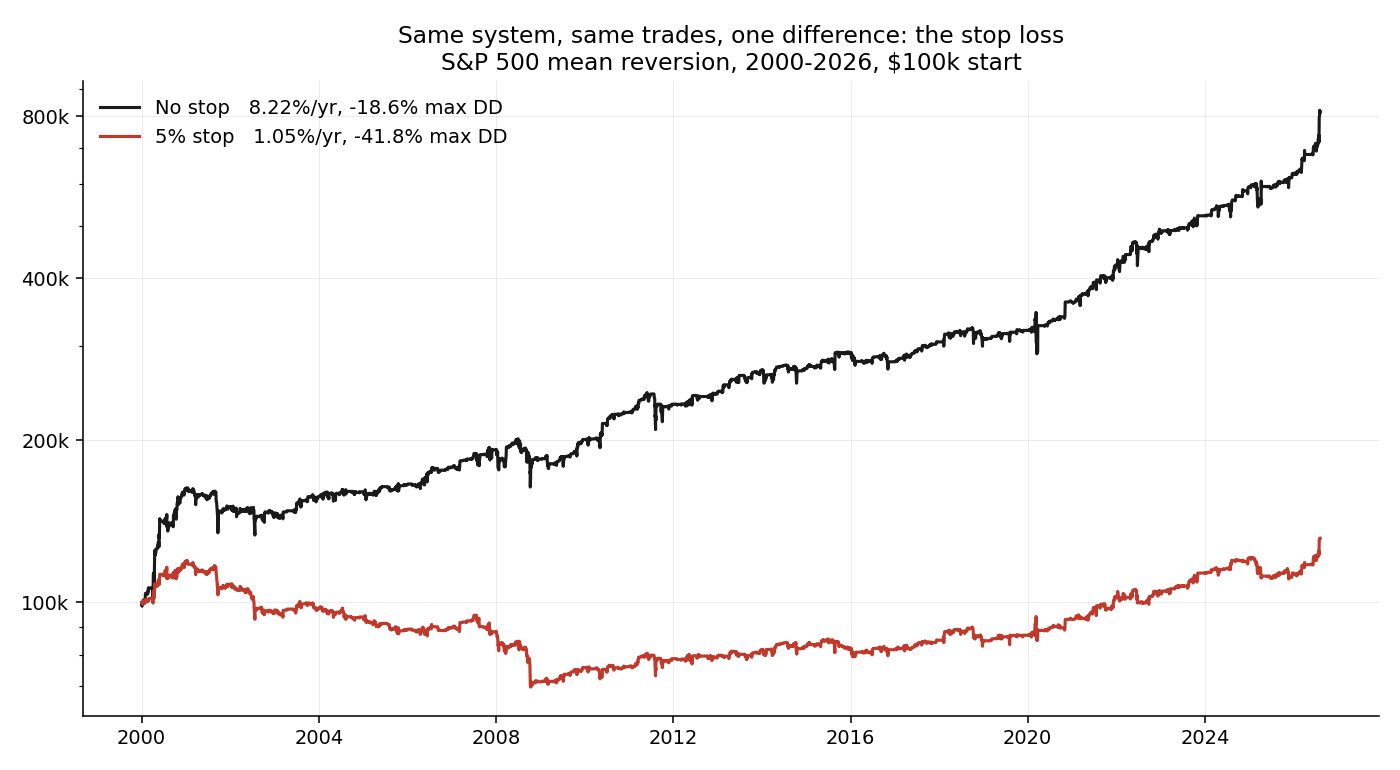
Against SPY over the identical window, bought on the first day and held to the last,
the system with no stop, 8.22% a year with a -18.63% worst drawdown
SPY bought and held, 7.01% a year with a -49.93% worst drawdown
The win rate fell along with the return, from 66.71% of trades closing green down to 49.05%.
Two winners in three became a coin flip. PF, the gross profit divided by the gross loss, went from 2.04 to 1.08, which is close enough to 1 to call the edge gone.

1508 trades, with the delisted names left in
My test runs on Norgate data that carries the companies which were later delisted.
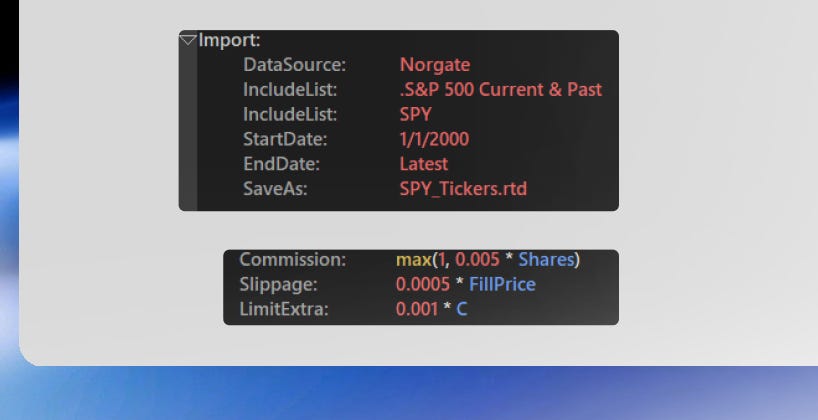
1508 trades in the version without a stop, 1957 with the 5% stop
commission of $1 or $0.005 per share
slippage of 0.05% of the fill price on every entry and every exit

Stop sells exactly what the entry buys
Case for a stop is that it caps the tail.
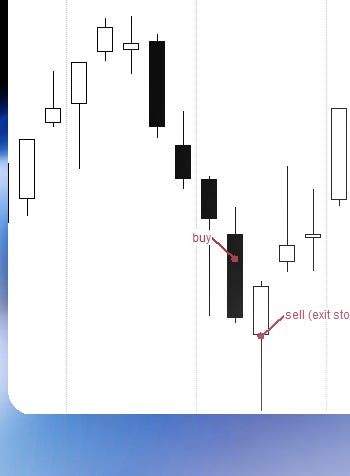
What this system earns is the bounce.
It buys while the price is falling and gets paid when the falling stops.
A stop is a standing instruction to sell while the price is falling, which is the exact moment the system is built to be holding.
Some traders expect that to cost return. Other also expect a shallower drawdown in exchange, because a shallower drawdown is what a stop is bought for.

Doubling the costs does not change the ranking
MAR, the annual return divided by the worst drawdown, is the measure here, because return on its own hides the thing this article is about. The base case is 0.44 with no stop against 0.03 with the 5% stop.
with commission and slippage doubled, 0.38 against 0.00
with every entry pushed one bar later, 0.30 against 0.03
with a $25M average dollar volume filter on the universe, 0.35 against 0.02

So what is actually holding this drawdown down?
If the stop is not the thing keeping this account out of trouble, something else is, and I would want to know what before I took anything off a live account.
Everything below:
12 stop loss backtests
RealTest full trading strategy script (copy & paste)
Do I run a stop or not (which I use?)
If the stop is not the thing protecting the money here, what is?